How Performance, Compensation, & Budget Connect
Performance, compensation, and budget connect through the merit process. At the end of the performance cycle, your performance rating helps determine your merit increase.
When making merit recommendations, leaders consider several factors, including performance rating, position in the salary range, and available merit funding. Together, these elements help ensure merit increases recognize employee contributions and support fair and consistent pay practices.
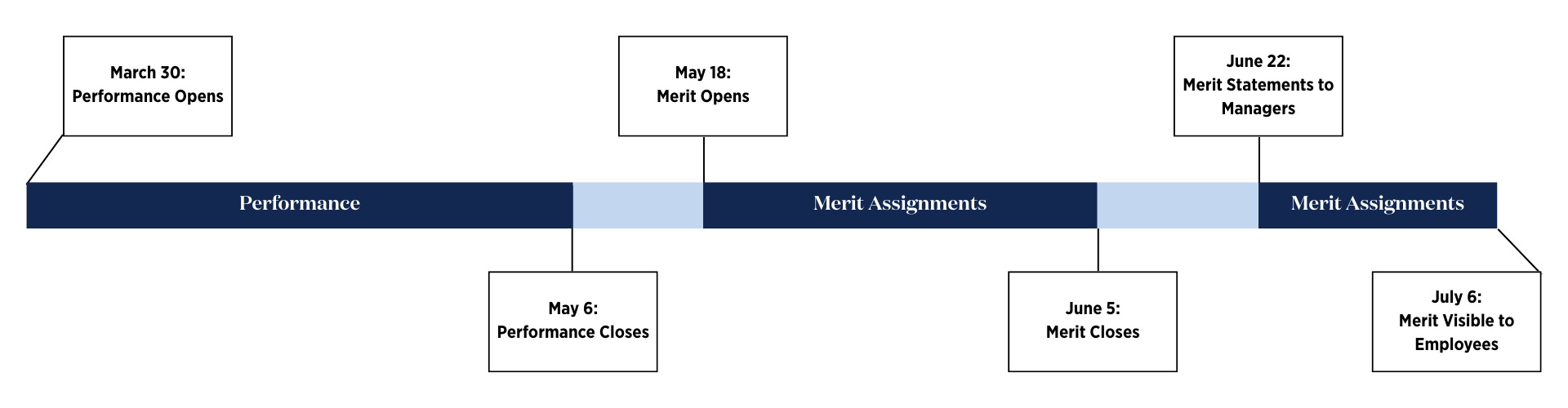
The '26 Merit Process Timeline
Resources for Merit, Performance, and Compensation
Resources for Performance
Resources for Check-Ins:
- A Guide to One-on-Ones (for Managers)
- One-on-One Sample Agenda (for Employees)
- Do’s and Don’ts of Feedback
Resources for Effective Performance Conversations
- Talent Development sessions
- LinkedIn Learning Course
- Giving and Receiving Feedback by Gemma Leigh Roberts, 34 min.
- Nano Tips – Managers Giving Difficult Feedback by Tatiana Kolovou and Brenda Bailey Hughes, 12 min.
Resources for Performance Reviews
Resources for Compensation
Compensation Strategy and Definitions
University of Richmond's salary structure
Staff Position and Compensation Change Policy
Training opportunities
Virtual | Compensation & You
In-person, starting March 19 | Manager's Guide to Compensation
Resources for Merit
Job Aid: Merit Recommendation Process
Video: Merit Planner Training Recording
Manager's Guide: Merit Conversations
Job Aid: Merit Compensation Statements
Frequently Asked Questions
-
What is merit?
Merit is a pay increase awarded based on your performance during the performance cycle. It recognizes your contributions and impact over the past year. -
What is a salary range?
Each role is assigned to a salary range with a minimum, midpoint, and maximum. The midpoint typically represents the market rate for that position.
-
How is performance evaluated?
Performance is assessed during the annual performance cycle based on goals, behaviors, and overall contribution to the University of Richmond’s mission. -
How does performance impact merit increases?
Your performance rating plays a key role in determining your merit increase. Higher levels of performance may result in higher merit opportunities, recognizing strong results and contributions.
-
Does where I fall in my salary range matter?
Yes. In addition to performance, managers consider where your current pay falls within your salary range.